

In medical device manufacturing, the key role and application of stainless steel casting processing technology
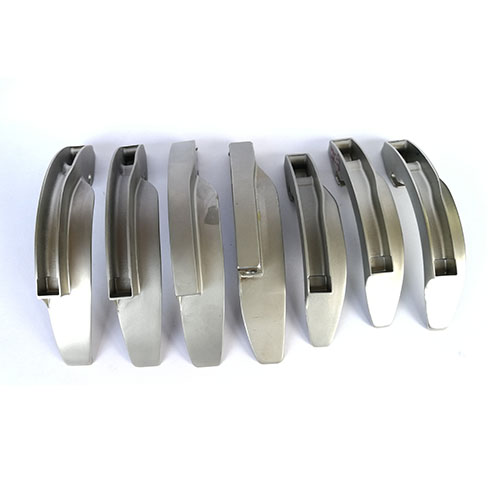
In medical device manufacturing, material selection and processing technology directly affect the performance, reliability and service life of the product. In recent years, with the continuous advancement of medical technology, the quality requirements of medical devices have become higher and higher. As a mature manufacturing process, stainless steel casting processing technology has been widely used in the field of medical devices. This article will discuss the importance and application prospects of stainless steel casting processing technology in medical device manufacturing.
Basic overview of stainless steel casting processing technology
Stainless steel casting processing technology uses a casting process to melt stainless steel and pour it into a prefabricated mold, and then cools and solidifies to form metal parts of the desired shape. This technology is suitable for producing parts with complex structures and can achieve high dimensional accuracy and surface quality. Commonly used casting methods include sand casting, lost wax casting and vacuum casting. Different casting methods are suitable for different needs.
Stainless steel casting processing is widely used in medical devices
Enhance the corrosion resistance of equipment
Most medical devices need to come into contact with the human body, especially devices implanted in the body, which have long-term contact with blood, tissue fluid and other biological fluids, so their corrosion resistance requirements are strict. Stainless steel has become one of the main materials for manufacturing medical devices due to its excellent antioxidant and corrosion resistance. Through casting processing, stainless steel can form medical device components with complex and seamless shapes, ensuring that the device is not damaged by the external environment during use.
Meet the needs of complex designs
With the continuous development of medical technology, the design of equipment has become more and more complex, and many equipment need to have fine structures and complex functions. Stainless steel casting technology can flexibly manufacture components with variable shapes and complex structures to meet the design requirements of surgical equipment, surgical implants, etc. Through accurate casting processes, diversified designs and high-standard production requirements of equipment components can be met.
Improve productivity and consistency
Traditional processing methods often require multiple mechanical processing or manual polishing, resulting in long production cycles and difficulty in ensuring product consistency. Stainless steel casting technology can form complex parts at one time, greatly reducing the workload of subsequent processing. In addition, casting technology can maintain high stability and consistency in mass production, ensuring that the quality of each medical device meets standards.
In medical device manufacturing, stainless steel casting technology has advantages.
cost advantage
Compared with traditional machining methods, stainless steel casting processing has significant cost advantages when producing a large number of complex parts. Casting can manufacture parts with complex shapes at one time, reducing reliance on post-processing and reducing production costs.
Highly malleable and flexible
Stainless steel casting processing technology has strong material plasticity and can process parts of almost any shape and size. This is especially important for manufacturing some medical device products with complex functions and special appearance.
Improve the mechanical performance of equipment
During the casting process, the grain structure of the metal can be optimized, thereby improving the mechanical properties of the metal parts, such as strength and hardness. This is especially important for medical equipment that needs to withstand high pressure or high load, and can ensure the safety and stability of the equipment during use.
Future development trends
With the development of new technologies such as smart medical care and minimally invasive surgery, the requirements for materials and processing techniques of medical devices are constantly increasing. Stainless steel casting technology is also constantly innovating. In the future, the accuracy, efficiency and functionality of casting technology may be further improved by combining new means such as 3D printing technology and intelligent manufacturing technology. Through the development of these technologies, the manufacturing of medical devices will be more accurate, and the performance and safety of the devices will be further improved.
Conclusion
Stainless steel casting processing technology plays an indispensable role in the manufacturing of medical devices. It not only meets the increasingly complex design needs of medical devices, but also improves the quality and production efficiency of the equipment. With the continuous innovation and development of technology, stainless steel casting technology will play a more important role in the field of medical devices in the future.