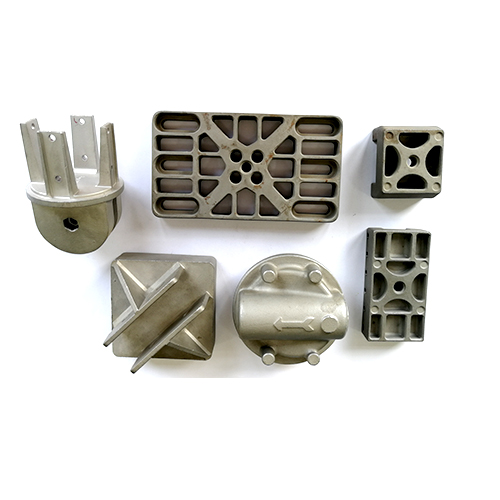

Tough Foundation: Carbon Steel Casting’s Journey from Automotive Parts to Heavy Machinery
Entering the field of automobile manufacturing, carbon steel castings are everywhere. From engine brackets, gearbox casings, to chassis suspension parts, and brake system calipers, these key components are often cast from carbon steel. The reason is that carbon steel has good casting fluidity and can form components with complex shapes; at the same time, carbon steel has good casting fluidity. At the same time, its moderate carbon content provides a good balance of strength and toughness, and the cost is relatively controllable. This allows the car to maintain reasonable manufacturing costs while ensuring safety and durability. Whether it is a family car or a commercial truck, carbon steel castings are invisible, ensuring the stable operation of the vehicle.
When the perspective turns to heavy machinery - such as mining equipment, engineering cranes, agricultural tractors and large transmission devices - the role of carbon steel casting is more prominent. These machinery operate under heavy load and high impact conditions all year round, which poses a strict test on the compression resistance, wear resistance and overall reliability of the components. .Carbon steel casting, especially medium and high carbon steel castings that have undergone composition adjustment and heat treatment, can produce thick gears, heavy-duty bearing seats, huge equipment frames and wear-resistant bucket parts. With their solid bodies, they bear thousands of tons of pressure and continuous vibration, becoming the "skeletal system" of heavy equipment.
From automobiles to heavy machinery, the application expansion of carbon steel casting reflects the deep fit between its performance and demand. The automotive field focuses on lightweight components and structural integrity, while heavy machinery tends to withstand upper limit loads and harsh environments. By adjusting the carbon content, carbon steel casting By combining alloy elements and optimizing the casting process, a variety of solutions have been found between the two. It may not have as dazzling parameters as some special alloys, but with its wide applicability, mature process foundation and outstanding economy, it has achieved seamless coverage from roads to mines.
This leap also reflects the internal logic of the development of manufacturing: not all scenarios require expensive or special materials, reliable, applicable and economical solutions often have longer vitality. This is exactly the case with carbon steel casting, which adapts to ever-changing industrial needs with its unchanged solid nature.
Looking to the future, with the continuous advancement of casting technology - such as the optimization of simulated pouring and the enrichment of quality inspection methods - the internal quality and appearance accuracy of carbon steel castings will also be improved. This will allow it to find new uses in the chassis components of new energy vehicles and the stress-bearing structures of intelligent heavy machinery. From small auto parts to mammoth mechanical skeletons, the vast world of carbon steel casting has always been rooted in the deep soil of industrial practice, silently supporting the operational foundation of modern society.