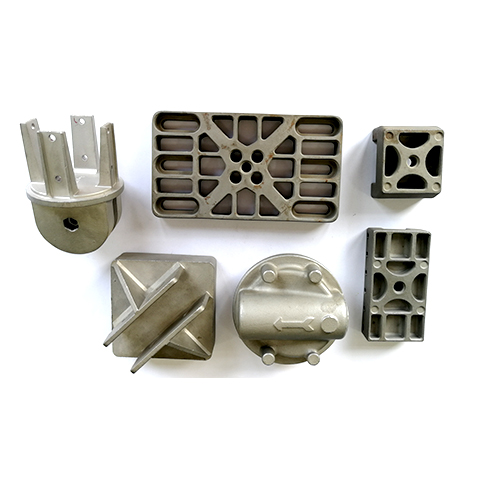

The "skeleton" of engineering machinery: how carbon steel casting supports modern industrial construction
Carbon steel is an alloy material with iron and carbon as the main elements. The casting process involves pouring molten steel into a mold and cooling it to form the required parts. This material has good strength, toughness and processability, and the cost is relatively controllable, so it occupies an important position in the field of construction machinery. From the boom of the excavator to the frame of the loader, from the turntable of the crane to the drum of the road roller, carbon steel casting parts are everywhere and have become an indispensable support element in mechanical structures.
In engineering machinery, the application of carbon steel casting is mainly reflected in large structural parts and key connectors. For example, the bucket and arm of an excavator need to withstand huge impact force and wear, and the tensile strength and wear resistance provided by carbon steel casting ensure the long-term use of these parts under harsh working conditions. .At the same time, the toughness of carbon steel makes components less likely to break when subjected to sudden loads, thereby improving the overall safety of the machinery. In addition, the flexibility of the carbon steel casting process allows the production of complex-shaped components, which provides more possibilities for mechanical design and helps achieve a balance between function and structure.
The advantage of carbon steel casting lies not only in its mechanical properties, but also in its economy and adaptability. Compared with other materials, carbon steel has a wide range of raw material sources and a mature casting process, which allows production costs to be reasonably controlled. This is of great significance for industries such as engineering machinery that require mass production. At the same time, carbon steel casting parts can adjust their performance through subsequent processing methods such as heat treatment to meet the specific needs of different machines. For example, by adjusting the carbon content and process parameters, parts suitable for high-load or corrosion-resistant environments can be manufactured, thereby expanding the application scope of engineering machinery.
With the advancement of industrial technology, carbon steel casting processes are also constantly improving. Modern casting technology combines digital design and intelligent control to improve the quality and consistency of castings. For example, optimizing mold design through simulation software can reduce casting defects and improve the reliability of components. These advances have further strengthened the role of carbon steel casting in engineering machinery, making it a key force supporting modern infrastructure and industrial projects.
In short, carbon steel casting, as the "skeleton" of engineering machinery, lays a solid foundation for the durability and functionality of the machinery with its solid performance and wide applicability. In the future industrial development, carbon steel casting will continue to play its unique role and promote the engineering machinery industry to move in a more reliable and economical direction.