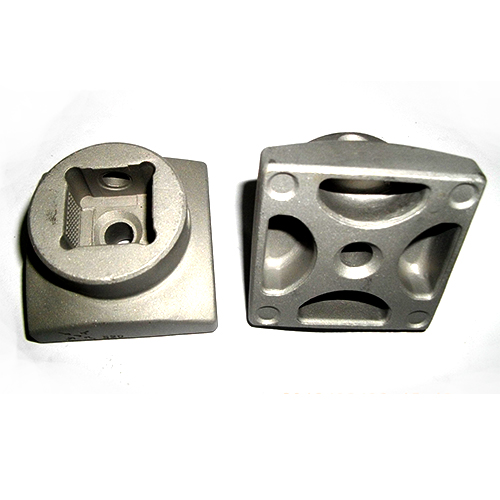

Exploring the road to alloy steel casting: from design blueprint to formed workpiece
Design model and mold preparation
Everything starts with the design drawing. Based on the use of the workpiece, the engineer determines its structure, size and material model. After the design is completed, the technical team will use wax or resin to make a model consistent with the shape of the workpiece. This step is the basis for subsequent steps, and the accuracy of the model has a direct impact on the specifications of the workpiece.
Making a shell
After the model is completed, multiple layers of refractory materials need to be covered on its surface to form a hard mold shell. Each layer of coverage needs to be dried and hardened to ensure the stability of the mold shell. This process requires the operator to control the uniformity and thickness of the coating to prevent deformation or cracking in subsequent steps.
Demolding and baking
After the mold shell is completely solidified, the wax or resin inside is melted and flowed out by heating, leaving a hollow mold cavity. Then, the mold shell is sent to the roasting furnace for high-temperature treatment to further improve its strength and stability and prepare for pouring.
Smelting and Pouring
Alloy steel raw materials are melted in a high-temperature furnace to form molten metal. Operators need to control the melting temperature and time to ensure the fluidity of the molten metal and reduce impurities. Subsequently, the molten metal is poured into the preheated mold shell to fill the mold cavity.
Cooling and shelling
After the pouring is completed, the mold shell is moved to the cooling area for natural cooling. The metal gradually solidifies in the mold shell to form the shape of the workpiece. After complete cooling, the outer layer of the mold shell is removed by mechanical vibration or tapping to initially expose the workpiece.
Cleaning and post-processing
The surface of the workpiece after shelling is still attached with refractory material, which needs to be cleaned by sandblasting or pickling. Subsequently, the workpiece is heat treated as needed to adjust its mechanical properties. If necessary, local dimensions will be trimmed through mechanical processing to ensure that it meets the design specifications.
Inspection and delivery
After the workpiece is completed, it needs to undergo a number of inspections, including dimensional measurement, surface defect inspection and performance testing. Only workpieces that meet the requirements will be delivered for use.
Conclusion
From drawings to formed workpieces, the casting process of alloy steel combines the experience of material science and process technology. Each step needs to be strictly controlled to produce workpieces that meet the requirements. The realization of this process not only reflects the rigor of industrial manufacturing, but also provides reliable component support for many industries.