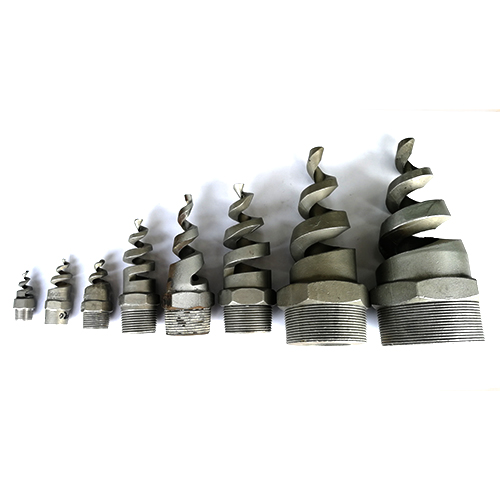

The yield rate of alloy steel castings is low? Maybe the nozzle process is not done correctly!
In the production process of alloy steel castings, yield is a key indicator to measure production stability. However, many companies often face the problem of low yield, which not only increases production costs, but also affects delivery schedules. Among many influencing factors, the die nozzle process is often ignored. In fact, deviations in this link are often potential causes of defects. This article will explore the importance of the die nozzle process in alloy steel casting and analyze how to improve yield by optimizing the process.
The function and common problems of the nozzle process
The nozzle is a component used to control the flow of molten metal during the casting process. The process involves the design, installation and maintenance of the nozzle. If the process is improper, it may lead to unstable metal flow, oxidation and slag inclusions or uneven temperature distribution, which may lead to defects such as pores and shrinkage. For example, mismatching the nozzle aperture or position deviation will cause uneven mold filling and affect the compactness of the internal structure of the casting.
In actual production, many companies may pay too much attention to melting or mold design and ignore the detailed adjustment of the die nozzle. This is often due to a lack of understanding of process correlation or a lack of systematic detection methods. For example, if the wear of the nozzle is not replaced in time, it will cause the flow rate of the molten metal to change, indirectly reducing the consistency of the casting.
Practical methods for optimizing the nozzle process
To solve the yield problem, we first need to start with the selection and installation of the die nozzle. It is crucial to select a nozzle material that matches the alloy characteristics. For example, high-temperature resistant materials can reduce the risk of thermal deformation. At the same time, the alignment of the nozzle and the flow channel system should be ensured during installation to avoid turbulence caused by local resistance.
Secondly, the setting of process parameters needs to be combined with actual production data. By monitoring the flow rate and temperature of the molten metal and adjusting the opening and closing time of the nozzle, a smoother filling process can be achieved. It is recommended to use digital tools to record parameter changes to facilitate analysis of their impact on yield. In addition, regular maintenance of nozzle components and cleaning of residues can effectively extend service life and reduce unexpected failures.
Finally, employee training cannot be ignored. Operators should be familiar with the working principle of the nozzle and be able to identify common abnormalities. Through small batch trial production and gradual optimization, companies can accumulate experience and form process standards suitable for their own production.
Improving the yield of alloy steel castings is a systematic process, and the screw nozzle process is one of the links, and its correct implementation has a significant impact on the overall results. By scientifically adjusting process details, companies can gradually improve product quality under the premise of controllable costs. Remember, details determine success or failure - starting with the screw nozzle may be the breakthrough to solve the yield problem.
If you are facing similar problems, you might as well start with process troubleshooting, you may gain unexpected results.