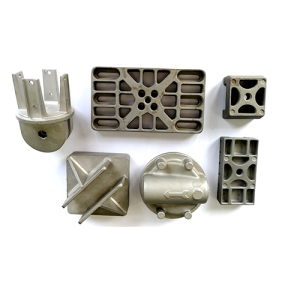

The core process of precision forming of carbon steel parts: an in-depth interpretation of investment casting technology
Process principles and technical characteristics
Investment casting, also known as lost wax casting, its core principle is to use fusible materials to make a model, then cover the surface of the model with multiple layers of refractory materials to form a shell, then heat the model to melt and flow out, and finally pour molten metal to obtain a casting.
The remarkable feature of this process is the realization of "near net shape", that is, after the casting is formed, only a small amount of processing or no processing is required to meet the usage requirements. For carbon steel materials, this feature means a significant increase in material utilization and a significant reduction in subsequent processing costs.
Detailed explanation of process flow
The investment casting process includes multiple rigorous steps: first, mold design and manufacturing, which determines the initial accuracy of the product; then wax pattern making, which presses wax material into the mold to obtain a wax pattern consistent with the shape of the part; and then wax pattern assembly, where multiple wax patterns are assembled on the pouring system to form a wax tree.
Shell making is a key link in the process. Through multiple dip-coatings of refractory paint and sanding operations, a shell of moderate thickness and sufficient strength is formed on the surface of the wax model. The dewaxing process uses steam or hot water to remove the wax material from the shell to form a hollow cavity.
In the melting process, the mold shell is roasted at high temperature to remove residual wax and improve the strength of the mold shell. This is followed by molten steel pouring. The molten carbon steel is injected into the mold cavity. After it cools and solidifies, the casting is obtained through post-processing processes such as shell vibration and cutting.
Technical advantages and application value
The investment casting process brings many technical advantages to the manufacturing of carbon steel parts. It can produce parts with complex shapes, including those with internal cavities and curved channels; the castings have good dimensional stability and high surface finish; at the same time, the process is suitable for various carbon steel materials, and good forming effects can be obtained from low carbon steel to high carbon steel.
At the application level, this technology is widely used in many industrial fields. In machinery manufacturing, it is used to produce various transmission components and connectors; in the automobile industry, it is used to manufacture engine parts and gearbox components; in the field of hardware tools, it is used to produce various hand tools and cutting instruments. In addition, investment casting carbon steel parts can also be seen in art casting, medical equipment and other fields.
Technology Development and Future Trends
As the technological level of the manufacturing industry continues to improve, the investment casting process continues to evolve. Modern investment casting combines digital technology and uses CAD\/CAM for mold design and manufacturing, which greatly improves the accuracy and consistency of the process; the application of new refractory materials improves the surface quality of castings; the introduction of process control technology makes the entire production process more stable and reliable.
Environmental protection and sustainable development have also become important directions for the development of this technology. The development and application of environmentally friendly materials such as water-soluble mold shells and non-toxic and harmless binders have made investment casting more in line with the green manufacturing requirements of modern industry.
Looking at the application of investment casting technology in the manufacturing of carbon steel parts, it is not difficult to find that the reason why this process can become a reliable choice for complex parts molding is due to its systematic process design and rigorous process control. With the continuous emergence of new materials and new equipment, this traditional process will continue to radiate new vitality and provide more solid technical support for the manufacturing industry.