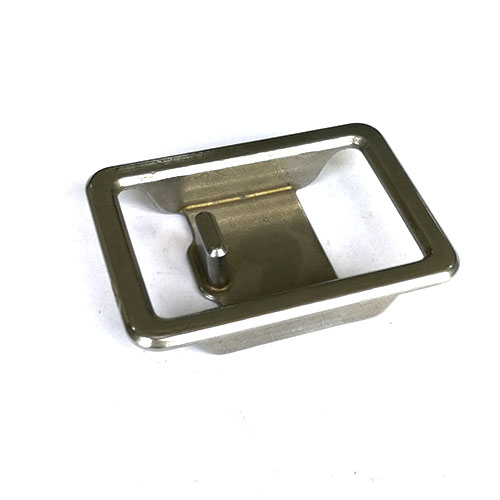

Say goodbye to complex assembly: Stainless steel casting promotes the development of product integrated molding technology
Stainless steel casting, often referred to as investment casting, is a process that forms complex components by making disposable wax patterns or models and then injecting stainless steel melt. The outstanding feature of this method is that it can directly manufacture individual components with complex shapes and complete structures, thus avoiding the common assembly links such as cutting, welding or bolting in traditional manufacturing. For many industries, this means that the path from design to molding of products is greatly shortened, while reducing errors and potential weaknesses caused by assembly.
During the product design stage, stainless steel casting allows engineers to more freely explore innovative forms. Traditional assembly methods are often limited by interface issues between components, while integrated molding breaks these limitations. For example, in the fields of aerospace, automobile manufacturing, or medical equipment, many key components need to have high strength, corrosion resistance, and lightweight properties. Through stainless steel precision casting, these components can be produced as a whole, with a more coherent internal structure and an external contour that is more in line with fluid mechanics or ergonomics requirements. This not only improves the functionality of the product, but also extends its service life.
From the perspective of the production process, stainless steel casting simplifies the operating steps and reduces resource consumption. The traditional assembly process usually involves the processing, inspection and assembly of multiple sub-components, and each step may introduce new variables. Integrated molding integrates multiple functions into a single component, reducing material waste and energy use. At the same time, because the stainless steel material itself has good plasticity and corrosion resistance, the cast products are easier to maintain during subsequent processing and are suitable for use in harsh environments.
In addition, stainless steel casting shows obvious advantages in cost control. Although initial mold production may require some investment, in the long term, integrated parts reduce the labor and time required for assembly, reducing inventory management and supply chain complexity. For high-volume production, this process can maintain a stable quality level and reduce rework and scrap rates due to mismatched parts.
In practical applications, stainless steel casting has successfully served many fields. For example, in the manufacturing of industrial pumps and valves, traditional methods require the assembly of multiple parts into a complete system, but now an integrated pump body with complex internal flow channels can be directly generated through casting, which improves sealing and pressure bearing capacity. In consumer electronics, some shells and structural parts also use this process, achieving a combination of beauty and practicality.
Of course, the promotion of stainless steel casting also faces some challenges, such as strict control requirements for process parameters and the need to combine material science and simulation technology for optimization. However, with the development of digital design and intelligent manufacturing, these difficulties are gradually being overcome. In the future, we have reason to believe that stainless steel casting will be popularized in more industries, helping manufacturers bid farewell to complex assembly and move towards more integrated and reliable product solutions.
In short, stainless steel casting, as an important technology to achieve integrated product molding, not only simplifies the production process, but also enhances the overall performance of the product. It represents the trend of manufacturing towards intelligent and sustainable development, and provides solid support for industry innovation. By continuously improving the process and expanding applications, this technology is expected to play a more important role in global competition.